
Follow Me On Social Media!



Wait — Are You Actually Bleeding Money on Cloud Hosting Right Now?
The best value VPS isn’t the one your senior dev Slack-messaged you about back in 2019. It’s probably not the one you picked because their dashboard looked nice. And it’s almost definitely not AWS, Google Cloud, or Azure — unless you’re actually using all that fancy stuff they bundle in.
Here’s the awkward truth nobody says out loud: most developers overpay for cloud hosting because… they just never bothered to check. You sign up, you ship your app, you forget about the bill. Meanwhile, AWS is quietly taking $96 a month from you for something you could run on Hetzner for eight bucks.
Eight. Dollars.
This guide is basically me grabbing you by the shoulders and saying “hey, you don’t have to do this to yourself.” By the end, you’ll know which VPS providers actually give you the best bang for your buck in 2025, why egress fees are the sneaky villain nobody warned you about, and how to get a cushy, Heroku-like deployment experience without the Heroku-like price tag.
When I say “best value VPS,” I mean the sweet spot of cost, solid hardware, and a provider that won’t disappear overnight. Let’s find it.
Table of Contents
The Big Three vs. The Smart Picks: A Price Gap That’ll Make Your Jaw Drop
Okay, look at this table. Same specs — 4 vCPUs, 8 GB RAM. Different universe of pricing:
| Provider | Monthly Cost (4 vCPU / 8 GB RAM) |
|---|---|
| Contabo | ~$5 |
| Netcup | ~$6 |
| Hetzner | ~$8 |
| AWS (EC2 t3.large) | ~$96 |
| Google Cloud (n1-standard-2) | ~$144 |
| Azure (D2s v5) | ~$233 |
I’ll say it again: $8 on Hetzner vs. $233 on Azure. For the same kind of workload. That’s not a small difference — that’s “we could buy a decent laptop with the annual savings” territory.
So why does this gap exist? Basically, when you pay AWS, you’re not just paying for a server. You’re paying for the whole ecosystem — managed databases, fancy load balancers, compliance certifications, AI integrations, and the warm feeling of knowing trillion-dollar tech giants have your back. That’s all baked into the price, whether you use any of it or not.
Value VPS providers skip all that overhead. You get fast hardware, solid bandwidth, and Linux. That’s the deal — and for most projects, it’s genuinely all you need.
Worth reading: Not sure whether managed or unmanaged hosting is your vibe? Check out our VPS vs. shared hosting guide — it breaks down exactly when each makes sense.
The Thing That Actually Ruins Developers: Egress Fees
Alright, this is the part where things get a little spicy. If the price table above didn’t fully convince you, this section might.
Egress is just a fancy word for data that leaves your server — like when someone loads your webpage, downloads something, or watches a video you’re hosting. On a chill little side project? Not a big deal. On anything that gets actual traffic? Potentially a financial disaster.
Here’s what different providers charge per terabyte of outbound traffic:
| Provider | Egress Cost per TB |
|---|---|
| Contabo | $0 |
| Netcup | $0 |
| OVHcloud | $0 |
| Hetzner | $1 |
| AWS | ~$90 |
| Google Cloud | ~$80–$120 |
| Azure | ~$87 |
| Netlify | $550 😬 |
Yeah. Netlify charges $550 per terabyte. Five hundred and fifty dollars. AWS wants $90. Hetzner? One dollar. Contabo? Literally nothing.
Here’s why this matters so much: imagine your app goes viral — super exciting, right? On Hetzner, that’s just a great day. On AWS, that’s potentially a heart attack when you open your billing dashboard. There’s a well-known horror story that floats around developer Twitter every few months: some solo dev wakes up to a $100,000 cloud bill because their project blew up overnight and they hadn’t set any billing alerts. This is a real thing that happens to real people.
With value VPS providers, a traffic spike is just… good news. Flat-rate or free egress means you’re not playing Russian roulette with your credit card every time you share something on Reddit.
Handy tool: Cloud Pricing Comparison lets you see real-time pricing across AWS, Google Cloud, and Azure side by side. Very satisfying to look at after choosing Hetzner.
The Contenders: Your Top 4 Best Value VPS Picks
These aren’t sketchy budget hosts running servers out of a garage. These are legit, well-established providers that serious developers around the world actually use and trust.
1. Hetzner — The One I’d Recommend to a Friend First
If someone asked me “just tell me where to start,” I’d say Hetzner without hesitating. They’re based in Germany, have data centers in Europe and the US, and their reputation in the dev community is rock solid. Here’s what makes them great:
- Great hardware — modern AMD and Intel CPUs, NVMe SSDs, benchmark scores that hold up
- No surprise bills — the price on the website is the price you pay. Revolutionary concept, apparently.
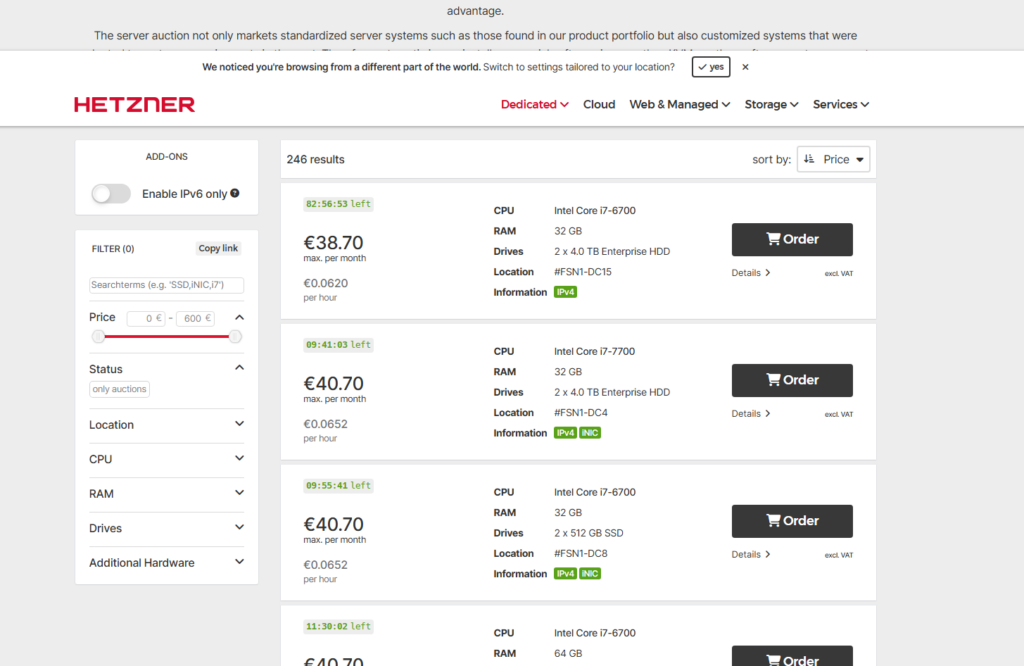
- The Server Auction — this is the hidden gem. Hetzner regularly auctions off older dedicated servers, sometimes at up to 94% off regular pricing. If you don’t need bleeding-edge hardware (spoiler: you probably don’t), this is genuinely wild value.
- Solid network — especially for anything serving European users
One honest caveat: you’re on your own here. There’s no hand-holding, no automatic security patches, no “hey, your firewall looks weird” alerts. You’re the sysadmin now. More on how to handle that without losing your mind later.
Go here: Hetzner’s Server Auction — bookmark it and check back regularly. Deals pop up constantly.
2. Contabo — The “I Need Maximum RAM for Minimum Money” Pick
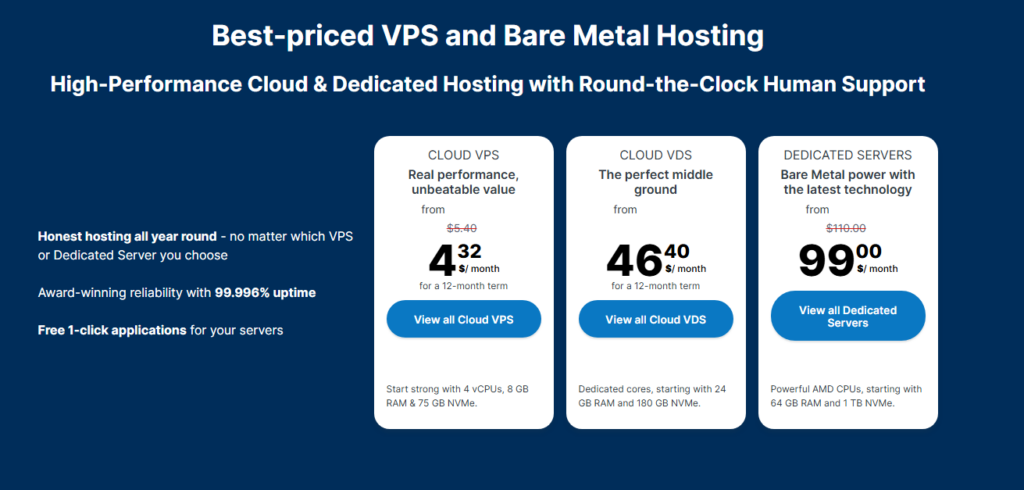
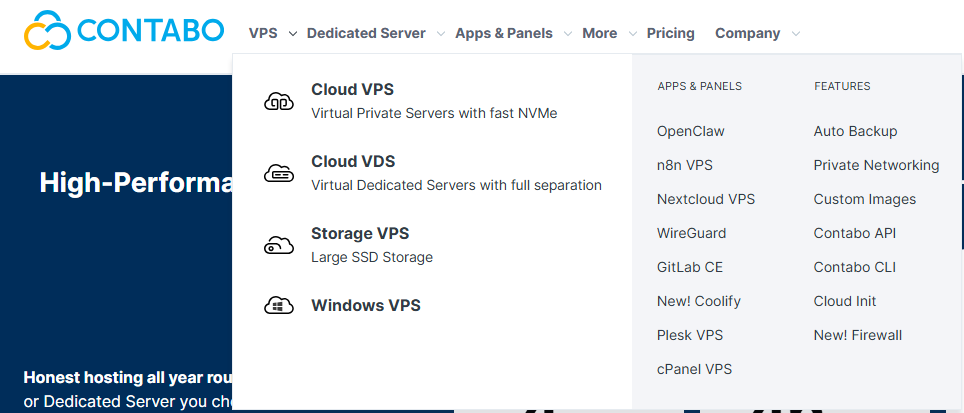
If your app is memory-hungry and your wallet is not, Contabo is your friend. Nobody else in this space gives you this much RAM and storage for this little money. It’s kind of absurd, honestly.
Contabo shines for:
- Databases and in-memory caches that need lots of RAM
- Media servers, backups, or self-hosted storage (think Nextcloud, Jellyfin)
- Dev environments where you just need horsepower on a shoestring
The trade-off? Their network performance can be a bit inconsistent, and don’t expect lightning-fast support responses. For a production app where milliseconds matter, Hetzner is more reliable. For basically everything else, Contabo’s specs-per-dollar ratio is unmatched.
3. Netcup — The Underrated Solid Choice
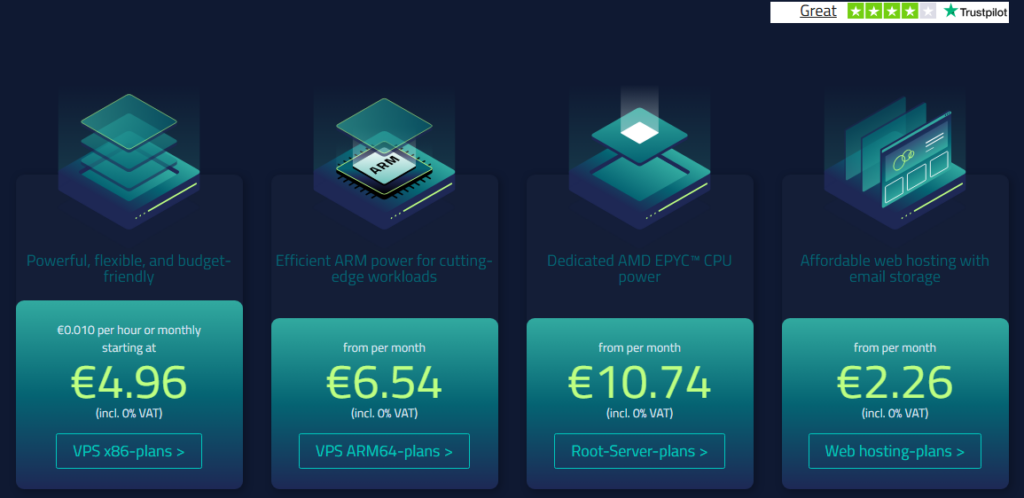
Netcup doesn’t get talked about as much as Hetzner, but they’ve got a quietly loyal fanbase for good reason. Their support is genuinely good (refreshing!), and their vServer plans start around $6/month with dedicated CPU cores — meaning you’re not sharing your processing power with some random neighbor on the same host.
4. OVHcloud — If You Need to Go Global
Need servers outside of Europe but can’t stomach going back to hyperscaler pricing? OVHcloud has data centers across North America, Europe, and Asia-Pacific, with zero egress fees. Solid option if your users are spread out.
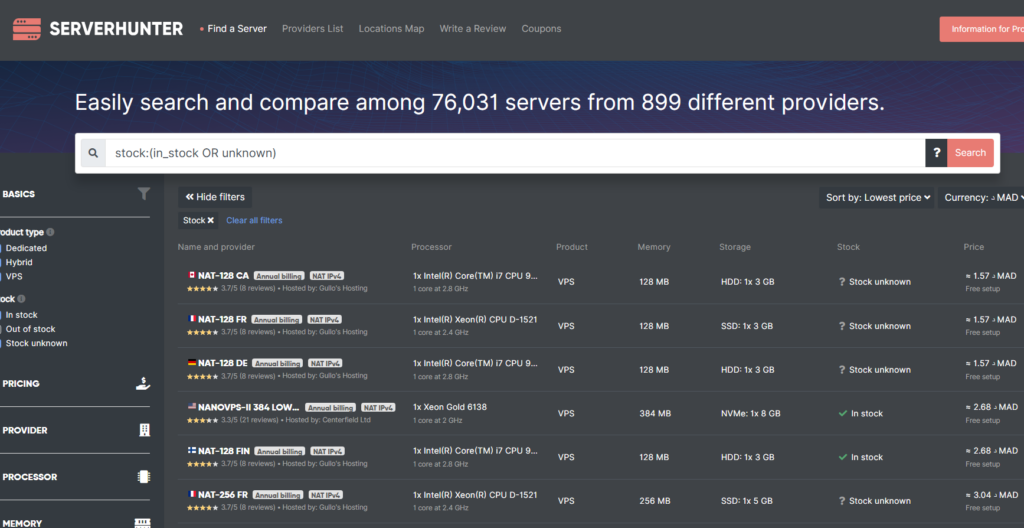
Also useful: ServerHunter aggregates pricing from tons of providers so you can compare configurations quickly. Great for finding the best value VPS for your exact setup.
Okay, But Is a Value VPS Actually Right for You?
Honest talk time. Switching to a value VPS isn’t just about money — it’s also about how much time you want to spend on infrastructure.
The Real Hidden Cost: Your Time
Here’s the thing about spinning up a Hetzner box: you get a Linux server. A blank one. No pre-installed app platform, no managed database with automatic backups, no one-click deploys. To get your app running, you’ll need to:
- SSH in and actually configure stuff
- Pick a Linux distro and set it up
- Handle your own firewall rules
- Set up Nginx or Caddy as your web server
- Sort out SSL certificates
- Figure out your own backup situation
If you’re comfortable with the command line, this is maybe a Saturday afternoon. If you’ve lived mostly in Vercel and Heroku land, this might feel like being handed IKEA instructions in a language you don’t speak.
No shame in that — it’s just worth knowing before you make the switch.
Provisioning Speed — A Real Trade-off Worth Knowing
AWS Lambda spins up in milliseconds. A new VPS takes anywhere from 30 seconds to a few minutes. If you’re building something that auto-scales to handle sudden traffic bursts, that matters. If you’re running a regular web app that just sits there serving requests, it really doesn’t.
The Best of Both Worlds: Self-Hosted PaaS
Here’s the move that makes value VPS actually comfortable: install your own mini-Heroku on top of it.
Tools like Coolify, Dokku, and Portainer turn your bare Linux box into something that feels like a managed platform — push code to deploy, manage environment variables in a web UI, get automatic SSL certificates, the works. But you’re running it on an $8 Hetzner server instead of a $50 Heroku dyno.
You get:
- One-click deployments (for real)
- Auto SSL via Let’s Encrypt
- Docker-based app isolation
- Built-in backups
Setup takes a few hours. Monthly savings vs. managed PaaS? Easily hundreds of dollars.
Level Up: Stop Clicking Around in the Console
Once you’re comfortable managing your own server, there’s one more thing that’ll change your life: Infrastructure as Code.
Ansible: Your New Best Friend
Look, AWS Console is a maze. I don’t say that to be mean — it’s just genuinely intimidating and weirdly hard to use consistently. Clicking through it to set up servers is slow, and if you have to do it again in six months, good luck remembering the exact steps you took.
Ansible is a much saner approach. You write a simple YAML file that says “here’s what I want this server to look like” — installed packages, firewall rules, SSH config, whatever — and Ansible makes it happen. On one server or fifty, it doesn’t care.
A basic setup playbook for a Hetzner server might handle:
- Updating all system packages
- Installing and configuring Nginx
- Setting up firewall rules with UFW
- Creating a deploy user with SSH key access
- Disabling root login and password auth
- Installing Docker and Docker Compose
- Setting up fail2ban to block brute-force attempts
Runs in minutes. Perfectly reproducible. Do it on ten servers and they’re all identical. Do it again in a year on a fresh box and you get the exact same result. It’s genuinely satisfying once you’ve done it a couple of times.
Yes, the Learning Curve Is Real — But Worth It
The terminal looks scary. YAML files look boring. Your first SSH session into a blank server is genuinely a bit of a “what have I done” moment.
But here’s the thing — every hour you put into learning this stuff pays off for years. Every Ansible playbook you write is reusable forever. And eventually you’ll look back at clicking through AWS Console and wonder why you ever did it that way.
Start here: The Ansible Documentation is actually really well written and beginner-friendly. Worth an afternoon of your time.
The Bottom Line: Stop Paying for Stuff You Don’t Use
The whole best value VPS question basically comes down to this: are you paying for what you actually need, or are you paying for the comfort of familiarity?
If you’re on AWS because you genuinely use RDS, Lambda, CloudWatch, and the rest of it in ways that justify $144/month per instance — totally fair. Those services are legitimately useful when you need them.
But if you’re on AWS because you’ve always been on AWS, nobody’s questioned it, and you haven’t opened your billing breakdown in months — you’re paying a convenience tax. And at $144/month vs. $8/month, that tax is $136 a month. Per server. Every month. Forever.
Here’s what I’d actually recommend doing:
- Start with Hetzner — best overall balance of performance, reliability, and honest pricing
- Keep an eye on the Hetzner Server Auction — some of the deals there are genuinely ridiculous
- Use Coolify or Dokku to get that smooth deployment experience without the platform pricing
- Learn Ansible — it’ll take a weekend and save you dozens of hours later
- Keep the Big Three around for what they’re actually great at — AI services, compliance-heavy stuff, global CDN
Your cloud bill is something you can control. Go control it.
Ask yourself honestly: am I paying for performance, or just paying for comfort?
Maybe Can help you
How to Use WordPress in 2026 – A Beginner’s Guide (No Tech Degree Required!) – WaveWrite
4 Best Cheap Domain Registrars in 2026 (Beginner-Friendly Guide) – WaveWrite